
Steel grooves and nylon cracks
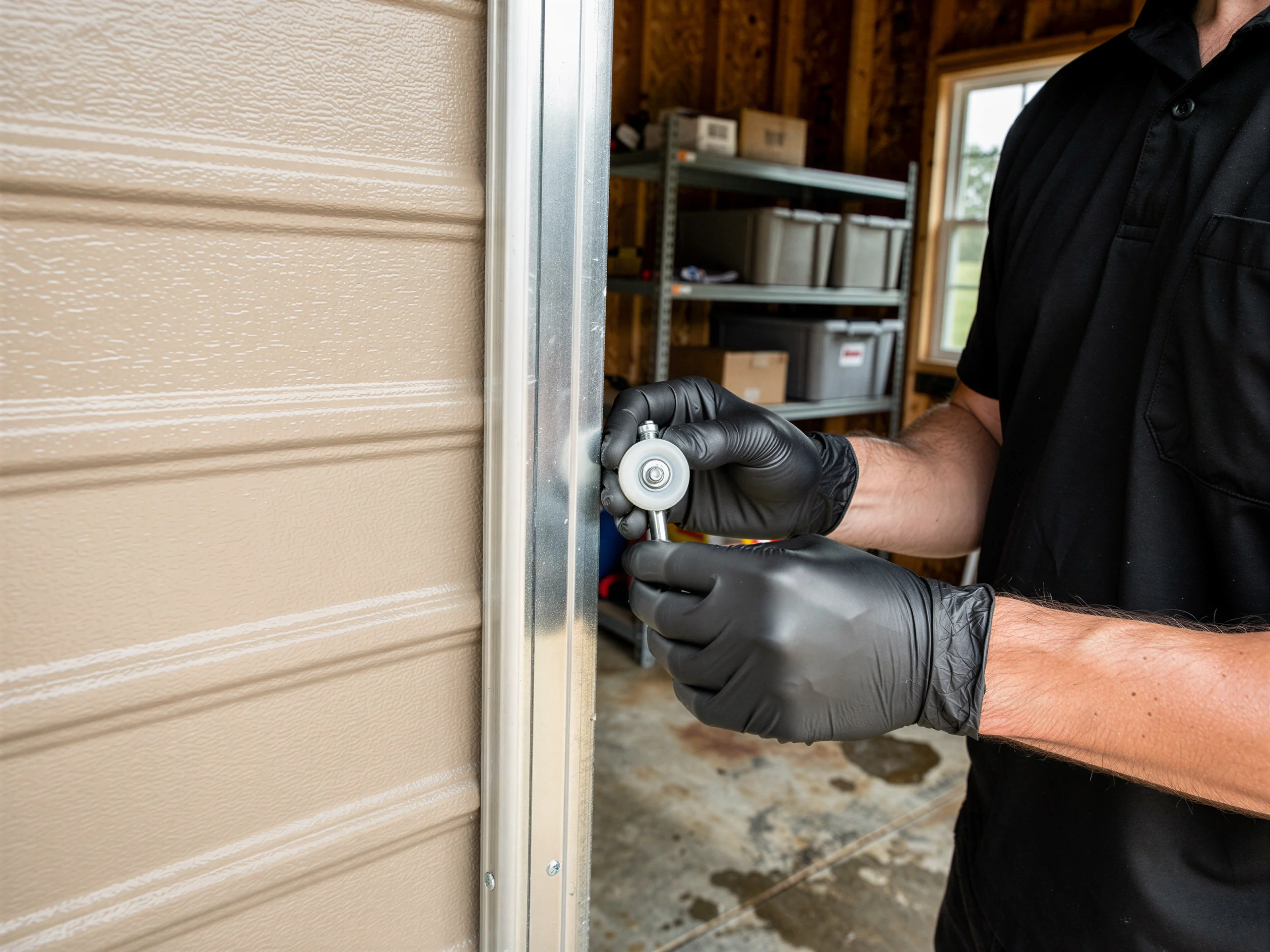
Steel rollers on these older tracks wear grooves into themselves over years of cold starts; nylon rollers (the common upgrade) hold up longer but still dry out and crack eventually.
Eau Claire, WI
Rollers wear fast on Eau Claire's 1960s-70s doors in a cold climate. Eau Claire Garage Door Pros replaces worn rollers across the service area.
Job timing
Rollers are one of the few garage door parts that fail on a schedule you can almost predict. They ride in the track every time the door moves, and in a service area built mostly between 1958 and 1991 - median 1977 - a lot of doors out here are running original or first-replacement hardware that's well past its working life.
Steel rollers on these older tracks wear grooves into themselves over years of cold starts; nylon rollers (the common upgrade) hold up longer but still dry out and crack eventually.
We see the same pattern across the 22 named areas in this service territory: a door that used to glide now bumps, hangs, or drags about two-thirds of the way up. That's a roller problem, not a spring problem, almost every time.
We don't guess at this from the truck - we pull the door, check each roller and the track alignment, and replace what's actually worn instead of swapping the whole set because it's easier to quote. Most jobs run a full set of ten rollers since they wear at close to the same rate, but we'll tell you straight if only a few need doing.
Local causes
Two things drive roller failure in this area more than anything else: the age of the housing stock and the cold. With most homes dating to the 1960s and 70s, a huge share of doors still have their second or even original roller set, well beyond the point where steel rollers develop flat spots and nylon rollers go brittle. Then the climate does the rest. This is a COLD, severe climate band, and that matters specifically for rollers - grease in the roller stem thickens in sub-zero mornings, nylon shrinks slightly and binds against worn track edges, and the stress of a motor pulling against a stiff roller is what actually snaps the stem or pops the roller out of the track. We get more roller failure calls in the cold months than any other time of year, and it's rarely one bad part - it's an old roller finally meeting a cold morning it can't handle. Houses on steel tracks installed before the nylon-roller era are the most common calls, simply because there are so many of them in a housing stock this age.
Warning signs
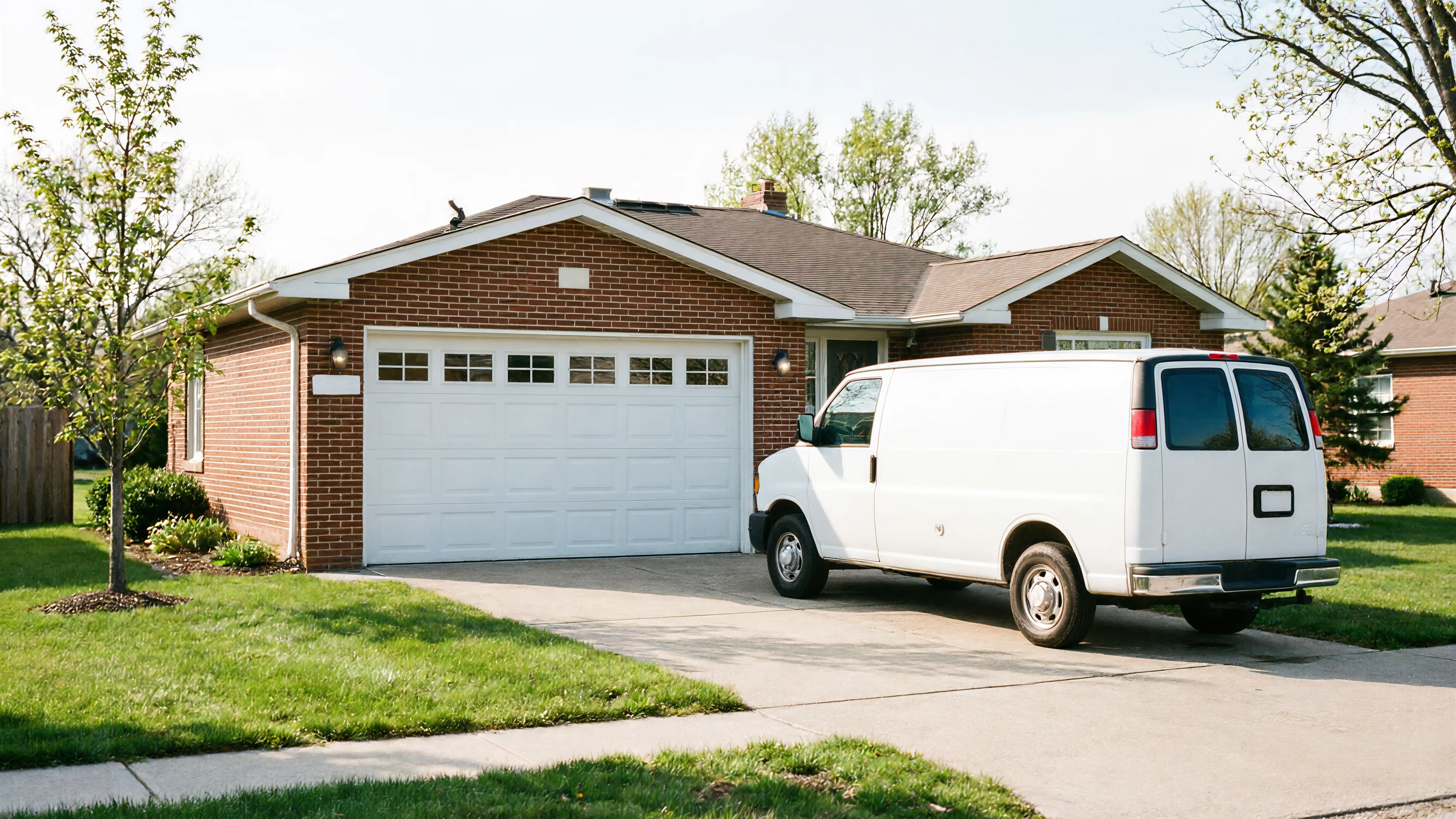
The door doesn't usually stop working all at once - it tells you first. A grinding or popping sound as the door passes a certain point in the track is almost always a flat-spotted or cracked roller, not the opener.
A door that jumps or shudders at the same spot on every cycle is a roller catching on a worn section of track or a bent roller stem. If the door hangs up a few inches before fully closing and the opener strains against it, that's often a roller that's seized enough to act like a brake.
You might also notice the door riding slightly off-center in the opening, rubbing one side of the frame - that's a sign one or two rollers have worn down more than the rest and thrown the door out of alignment.
None of these symptoms mean the door is unsafe to use for a day or two, but they do mean the roller is actively damaging the track every time you run it, and the fix gets more expensive the longer it's left.
DIY or pro
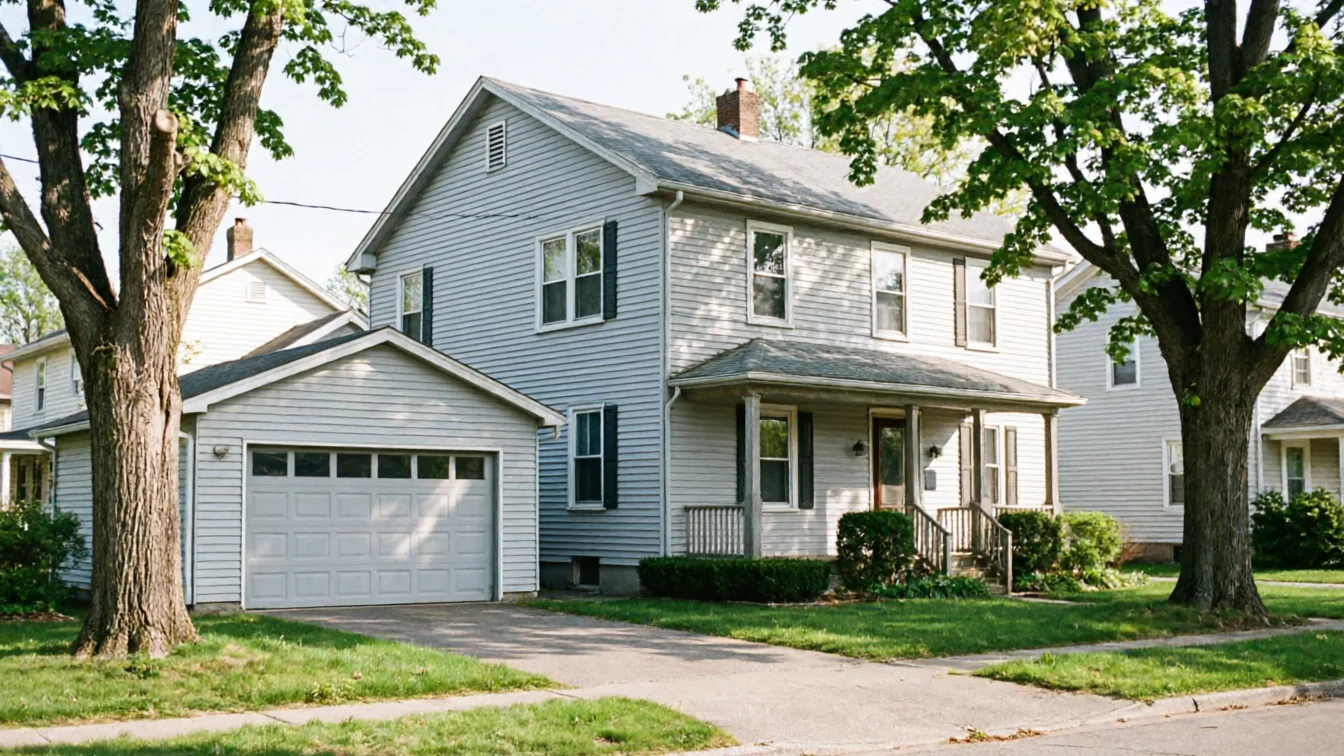
A roller swap is mechanically simple - pop the retaining bracket, slide the old roller out, slide the new one in - and plenty of homeowners in this area with a two-car garage and the right clips can do the bottom rollers themselves. What we don't recommend doing yourself is working on the top rollers near the torsion spring assembly while the door is under tension, or replacing rollers on a door that's already badly misaligned, since forcing a new roller into a bent track just damages the new part. We're honest that this is one of the lower-cost, lower-risk repairs we do, and we'd rather tell a homeowner how to do the bottom two themselves than send a truck for a ten-minute job. If the track itself is bent or the door is binding on both sides, that's worth a call - rollers won't fix a track problem.
Questions
Most doors have ten rollers, and since they wear at roughly the same pace from the same cycles and cold-weather stress, we usually replace the full set rather than one or two. If the door is newer or the wear is uneven, we'll just do the ones that are actually bad and tell you why.
Cold thickens the grease in the roller stem and can make nylon rollers slightly brittle, so a roller that's marginal in summer often fails outright on a cold morning. This service area sits in a severe cold climate band, so winter is when most roller calls come in.
Yes. A seized or flat-spotted roller makes the opener work harder to pull the door past that point, which strains the motor and gears over time. Fixing the roller early is cheaper than replacing an opener that's been fighting a bad roller for months.
No, and the symptoms get confused often. A broken spring usually means the door won't stay up or feels suddenly heavy. A bad roller usually shows up as noise, jumping, or binding at a specific spot in the track while the door still has normal lift.
Explore more
Ready when you are
Eau Claire Garage Door Pros repairs and installs garage doors, springs and openers in Eau Claire, WI and the surrounding area.