
Blog
What That Noise in Your Eau Claire Garage Really Means
Eau Claire homes mostly date to 1958-1991. That original hardware meets severe cold winters here, and certain noises mean a part is about to fail soon.
Season by Season
The noise your door makes changes with the season, and in this climate band that shift is sharp. Through the cold months here, which sit on the severe end of the scale, grease inside rollers and bearings thickens up and hardware contracts. A door that lifted quiet in October can start grinding by January simply because the metal has shrunk and the lubricant has gone stiff. That grinding isn't damage yet - it's friction with nowhere to go.
As the thaw sets in, a different sound shows up: a dull thud or hesitation partway up the track. Ground movement from the freeze-thaw cycle shifts slab and track alignment slightly, and a door that was fine in December can bind in March. Come summer, metal expands back out, and a lot of the winter noise quiets down on its own - which is exactly why people put off calling. The sound disappearing with warm weather doesn't mean the part that made it is fine; it means the part has more room to move before it binds again. Each cold season tightens that margin a little more, especially on hardware that's already decades old.
If your door is loud only in winter, that's a cold-stiffened or worn part, not a new problem each year.
What Is Going On
Most houses in this area were built between 1958 and 1991, with the median landing around 1977, and that's not a small detail - it's the whole reason the noise is happening at all. Across the 22 established neighborhoods in this service area, the stock leans heavily 1960s and 1970s. Garage door hardware from that era was built to a lower cycle count than what's sold today, and a lot of it has never been replaced, only patched.
A torsion spring is rated for a number of open-close cycles, not a number of years, but age still matters because the steel fatigues and the galvanizing wears thin with every cold snap. Rollers from that period are often steel-on-steel rather than nylon, and steel rollers in a steel track make a specific rattling clatter that gets worse, not better, over time. Cables stretch and fray at the drum end. None of this is dramatic until the day it is - a spring doesn't creak for a year before it breaks; it just breaks.
So when a door built or installed in that window starts making a new sound, it's rarely random. It's a part reaching the end of a life that started decades ago, under a cold load it was never going to carry forever.
What to Look At First
Start with the springs. If you hear a sharp, single bang - more like a gunshot than a squeal - that's very likely a torsion spring letting go, and the door will feel dramatically heavier to lift by hand afterward. Don't try to force it open with the opener; that's how you burn out a motor on top of a broken spring.
A rhythmic clunk once per revolution of the drum usually points to a flat spot on a roller or a bent track section, both common on doors from the 1960s-70s stock that still have the original steel rollers. A grinding whine that rises with the door's speed is often the opener's gear, not the door itself - worth knowing before you assume the worst.
Cables that look frayed or kinked near the bottom bracket are a stop-everything item. A frayed cable under tension can snap and whip, and on a door this old the cable has usually never been swapped. Check the bottom corners too: wood or metal fatigue there, common on original 1958-1991 panels, shows up as a popping sound right as the door seats on the floor.
One honest limit here: if the bottom section is rusted or rotted through, patching the noise isn't worth it. At that point you're replacing panels, not lubricating hinges.
How Local Conditions Play In
The cold here is severe enough that it changes which repairs make sense and when. A spring replacement done in January, with contracted steel and stiff grease, behaves differently once summer heat lets everything expand again - which is part of why a rushed cold-weather fix sometimes needs a second look come warmer months. Across the roughly 15,449 owner-occupied houses in this service area, most of them from the 1958-1991 window, that pattern repeats constantly.
A house three miles out in Altoona or Seymour is dealing with the same era of hardware and the same cold band as one closer in. The distance barely matters; the build year and the winter severity do. That's true out to Chippewa Falls at ten miles and Bloomer at twenty - the climate doesn't soften, and the housing age doesn't get much younger.
What does change is how exposed a given garage is. A door facing straight into prevailing winter wind cycles through temperature swings harder than one tucked against a windbreak, and that shows up as noise sooner. There's no fixing the climate. There is fixing the hardware that's been fighting it, unreplaced, since the Carter administration.
Questions
Common questions
My door only squeals in the morning when it's cold. Is that serious?
Usually it's grease gone stiff in the rollers or bearings overnight, which is common on original hardware from the 1960s-70s stock still common here. It's not an emergency, but it does mean the lubricant or the roller itself is past its working life and will keep getting worse each winter until it's addressed.
What's the loud bang I heard from the garage this morning?
That's almost certainly a torsion spring breaking. The door will feel very heavy to lift by hand and the opener may strain or fail trying to move it. Don't force it with the remote - leave it closed and get the spring looked at before using the door again.
Is a noisy door always a spring problem?
No. Rollers, hinges, the opener's gearing, and loose track bolts can all make noise that sounds alarming but isn't a spring. On houses from this area's 1958-1991 stock, worn steel rollers in steel track are at least as common a culprit as the spring itself.
Recommendation
You Might Also Like
More garage door guides for Eau Claire homeowners.
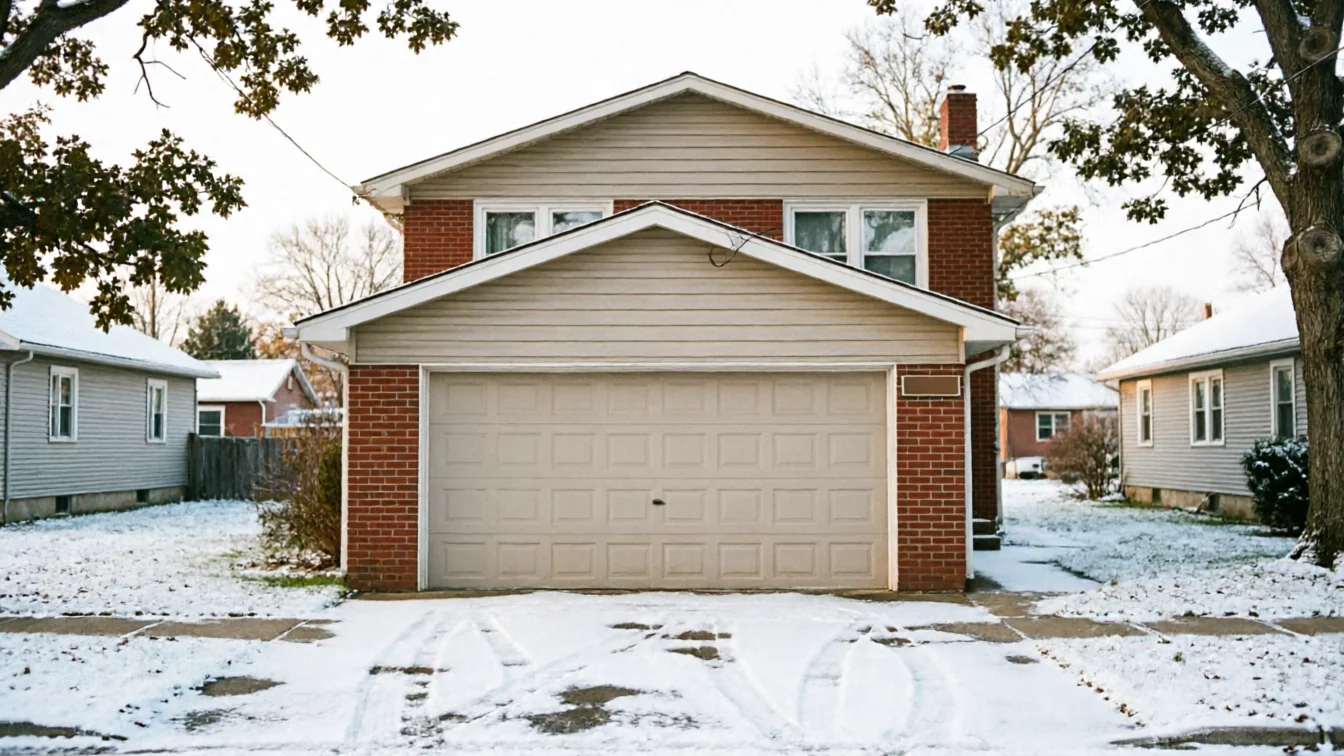
Why Your Garage Door Jumps the Track in Eau Claire
Eau Claire homes built mostly 1958-1991 and our cold winters push tracks out of alignment.
Read guide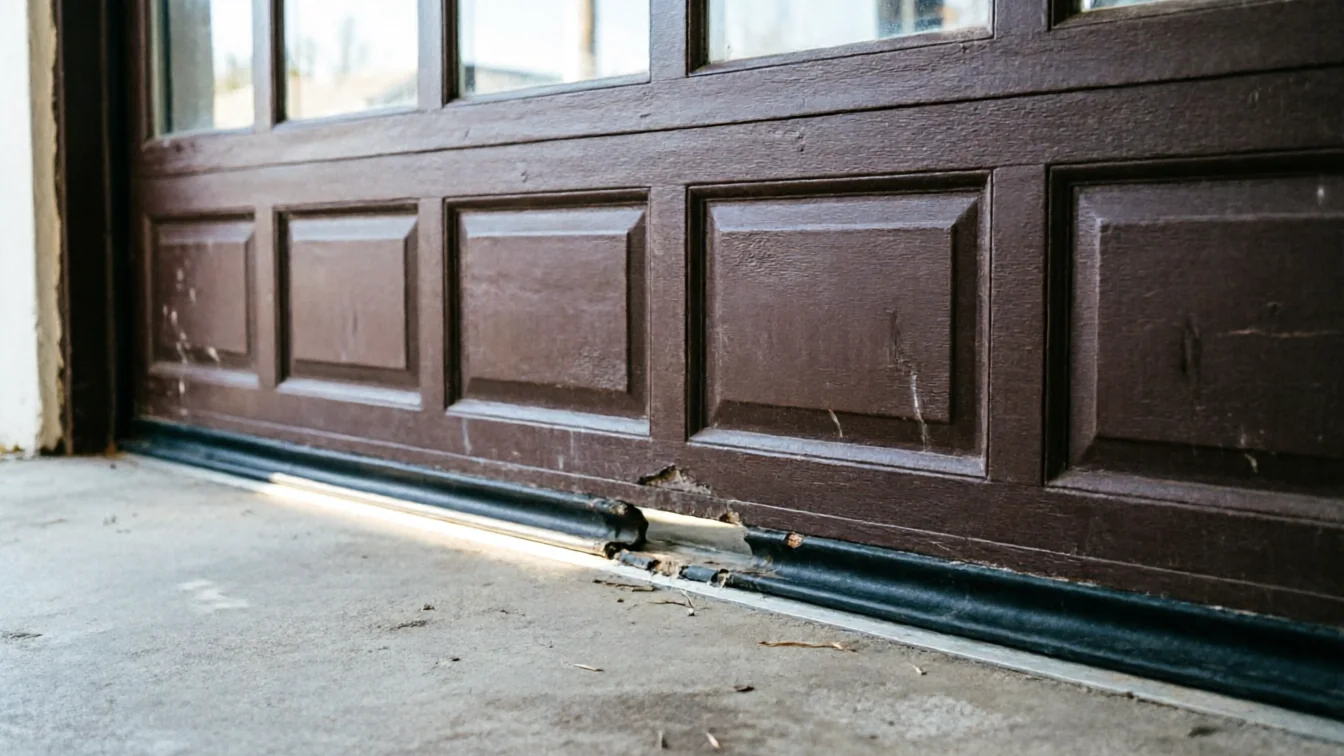
Is Your Eau Claire Garage Door Worth Repairing or Replacing
Eau Claire's housing mostly dates to 1958-1991, median 1977, so a lot of garage doors here are original.
Read guide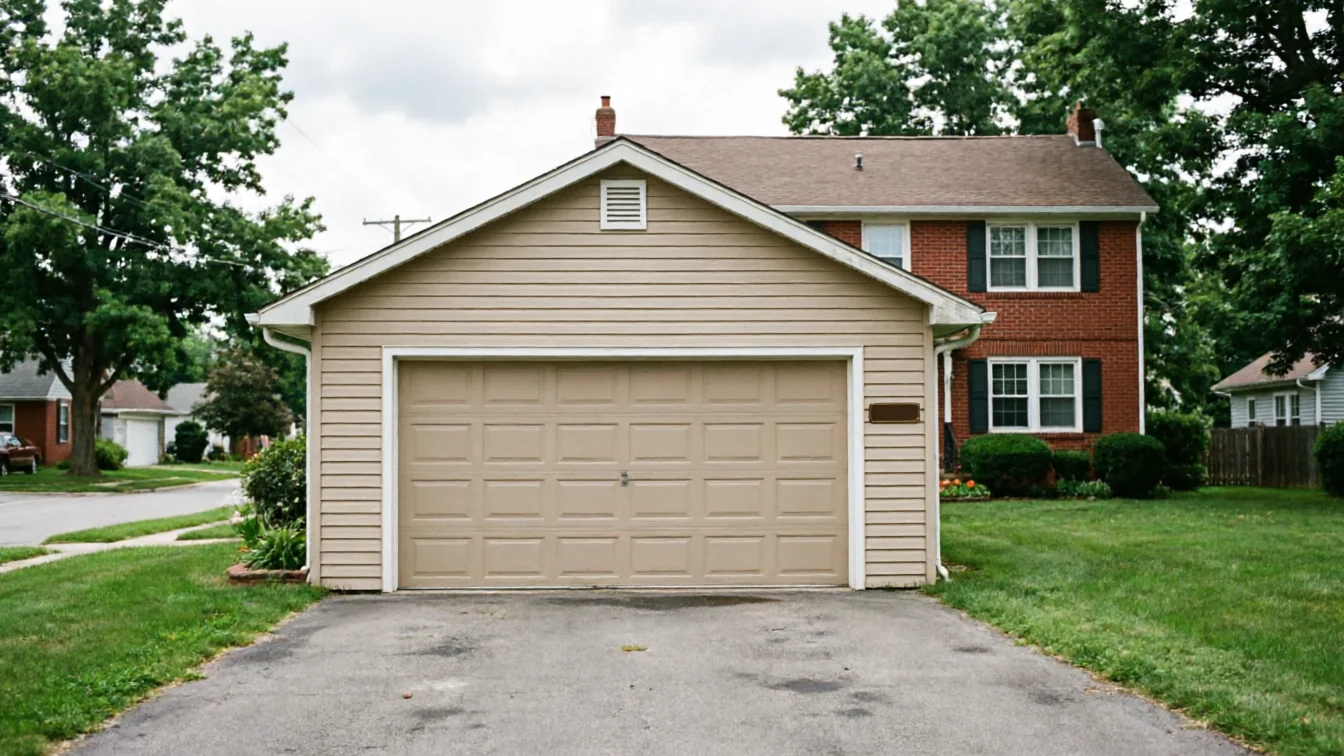
When a Garage Door Spring Breaks in Eau Claire's Cold
Eau Claire homes built mostly in the 1960s and 70s face cold-weather spring failures each winter.
Read guideReady when you are
Need a garage door sorted in Eau Claire?
Eau Claire Garage Door Pros repairs and installs garage doors, springs and openers in Eau Claire, WI and the surrounding area.